
Pool safety fence height is a critical aspect of protecting children and pets around swimming areas. At Clear Choice Pool Fencing, we understand the importance of adhering to strict regulations to ensure the safety of your loved ones.
This blog post will guide you through the required pool safety fence height, helping you navigate the complexities of Australian Standards and local regulations.
How Do Pool Safety Fence Regulations Protect Your Family?
The Foundation of Pool Safety Standards
Australian Standards for pool fencing (AS 1926.1-2012) establish strict requirements for pool barrier design and installation. These standards specify crucial aspects such as minimum fence heights, gap sizes, and gate mechanisms. The standard mandates a minimum fence height of 1.2 metres, measured from the finished ground level. This height effectively prevents young children from climbing over. Additionally, the gap at the bottom of the fence should not be larger than 10cm from the finished ground level.
Local Council Regulations: A Critical Layer
While national standards provide a baseline, local council regulations often add specific requirements tailored to regional needs. These may include additional safety measures or variations in permitted fence designs. Homeowners must consult their local council before installing a pool fence. Failure to do so could result in costly modifications or legal issues.
The Impact of Non-Compliance
Non-compliance with pool safety regulations carries severe consequences. Penalties vary by jurisdiction but can include hefty fines (ranging from thousands to tens of thousands of dollars). In some cases, homeowners must remove or significantly alter non-compliant fences at their own expense. More importantly, non-compliance increases the risk of drowning incidents, which can devastate families and communities.
Statistics Highlight the Importance
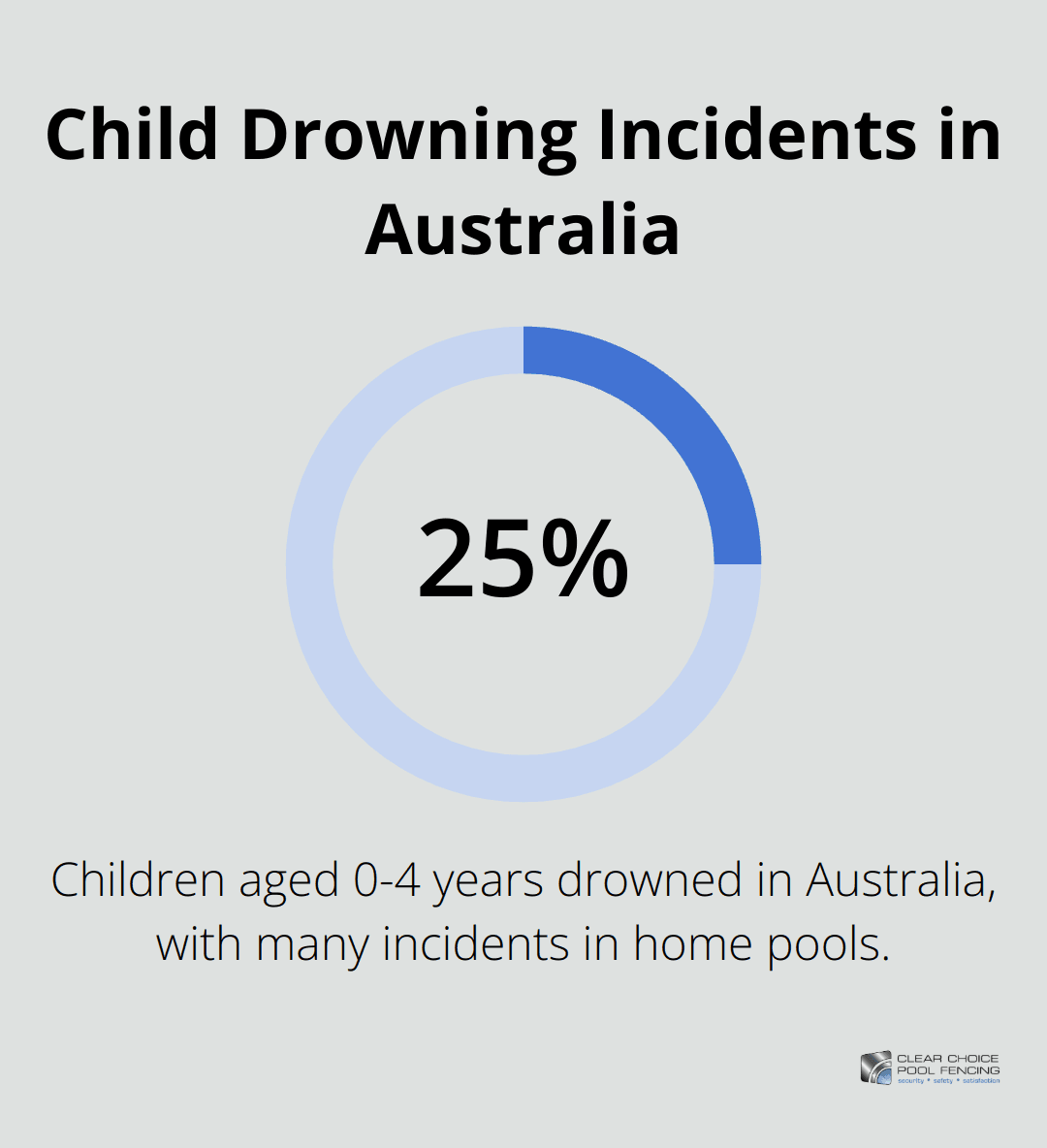
The Royal Life Saving National Drowning Report 2021 revealed that 25 children aged 0-4 years drowned in Australia, with a significant portion of these incidents occurring in home swimming pools. This statistic underscores the vital importance of compliant pool fencing in protecting young lives.
Professional Installation: A Key to Safety
Professional installation of pool fencing ensures compliance with all relevant regulations. Experts in pool fencing (such as Clear Choice Pool Fencing) stay up-to-date with the latest standards and local requirements. They can provide guidance on the most suitable fencing options for your specific situation, taking into account factors like pool type, property lay-out, and aesthetic preferences.
As we move forward, let’s examine the specific height requirements for pool safety fences and how to measure them correctly.
How Tall Should Your Pool Fence Be?
Minimum Height Requirement
Australian Standard AS 1926.1 – 2012 stipulates that a pool fence shall be not less than 1.2m high all the way around. This requirement prevents young children from climbing over the fence and accessing the pool area unsupervised. Pool owners must adhere to this standard to ensure compliance and safety.
Accurate Measurement Techniques
Proper measurement is essential for compliance. Measure the height from the finished ground level on the outside of the fence to the top of the fence. The ground level can change over time due to erosion or landscaping, so conduct regular checks to maintain compliance.

Addressing Sloping Ground
Sloping ground presents unique challenges for pool fence installation. The fence height must remain at 1.2 metres from the highest point of the slope within 500mm of the fence. This may require step-downs in the fence or additional panels to ensure consistent height and safety.
Above-Ground Pool Considerations
Above-ground pools require special attention. The fence must reach at least 1.2 metres high from the top of the pool wall. For pools with surrounding decks, measure the fence height from the deck surface. Check with your local council for any additional requirements specific to above-ground pool fencing.
Boundary Fences as Pool Barriers
When a boundary fence serves as part of the pool barrier, it must also stand at least 1.2 metres high, as per the Australian Standard AS 1926.1 – 2012. This height requirement applies to all pool barriers, including boundary fences.
While meeting the minimum height requirement is essential, exceeding it can provide an extra layer of safety. Many homeowners opt for slightly taller fences (especially in areas with active children or pets). However, balance safety with aesthetics and practicality when making this decision.
Height is a critical factor, but it’s just one aspect of pool safety. Proper gate mechanisms, non-climbable zones, and regular maintenance all play equally important roles in creating a safe pool environment. The next section will explore these additional factors that affect pool fence height requirements and overall safety.
What Factors Influence Pool Fence Height Requirements?
Several key factors can influence the height requirements for your pool fence, each playing a crucial role in ensuring the safety of your pool area.

Pool Type Variations
Different pools require specific fencing approaches. In-ground pools typically need the standard 1.2-metre height from ground level. Above-ground pools present unique challenges. If the pool wall is less than 1.2 metres high, additional fencing on top of the pool wall becomes necessary to reach the required height. (For instance, a pool with a 1-metre high wall would need at least 20 centimetres of additional fencing.)
All swimming pools and spas capable of containing water greater than 300mm must have a compliant safety barrier to restrict access to the pool area.
Proximity to Other Structures
The pool’s location in relation to other structures on your property can affect fencing requirements. Pools close to boundary fences or building walls may need these structures incorporated into the pool barrier system. The entire barrier system must meet the 1.2-metre height requirement in such cases.
Windows and doors that open directly to the pool area require special consideration. Safety screens or locks must be fitted to prevent direct access to the pool. This often involves the installation of window limiters or self-closing, self-latching mechanisms on doors.
Sloping Ground Challenges
Uneven terrain presents a significant challenge for pool fencing. On sloping ground, the fence height must be measured from the highest point within 500mm of the fence. This often results in a fence that appears taller on the lower side of the slope.
Severe slopes may necessitate step-downs in the fence to maintain the required height while following the land’s contour. Each section of the fence must independently meet the 1.2-metre height requirement.
Local Council Regulations
Local councils may impose additional requirements beyond the national standards. These can include specific height requirements for certain types of fences or additional safety measures for pools in particular locations. It’s important to check with your local council before installing a pool fence to ensure compliance with all relevant regulations.
Non-Climbable Zone Considerations
Pool safety standards require fences to have continuous 900mm non-climbable zones, areas that cannot be climbed by a small child. If this zone cannot be maintained (due to nearby structures or landscaping features), the fence height may need to increase to compensate.
Final Thoughts
Pool safety fence height plays a vital role in protecting children and pets around swimming areas. The minimum requirement of 1.2 metres (as mandated by Australian Standards) serves as a baseline for safety, but various factors can influence specific height requirements. Adhering to these regulations is not just a legal obligation but a moral responsibility to ensure the safety of your loved ones and visitors.
Professional installation ensures your pool fence meets all relevant regulations and safety standards. Experts in pool fencing stay up-to-date with the latest requirements and provide tailored solutions for your specific situation. At Clear Choice Pool Fencing, we offer premium pool fencing solutions that meet safety standards while enhancing the aesthetic appeal of your pool area.
The right pool safety fence height is an investment in your family’s safety and well-being. You create a secure environment where everyone can enjoy the pleasures of pool ownership without compromise. Regular maintenance and inspections are essential to ensure your fence continues to meet the required height and safety standards over time.